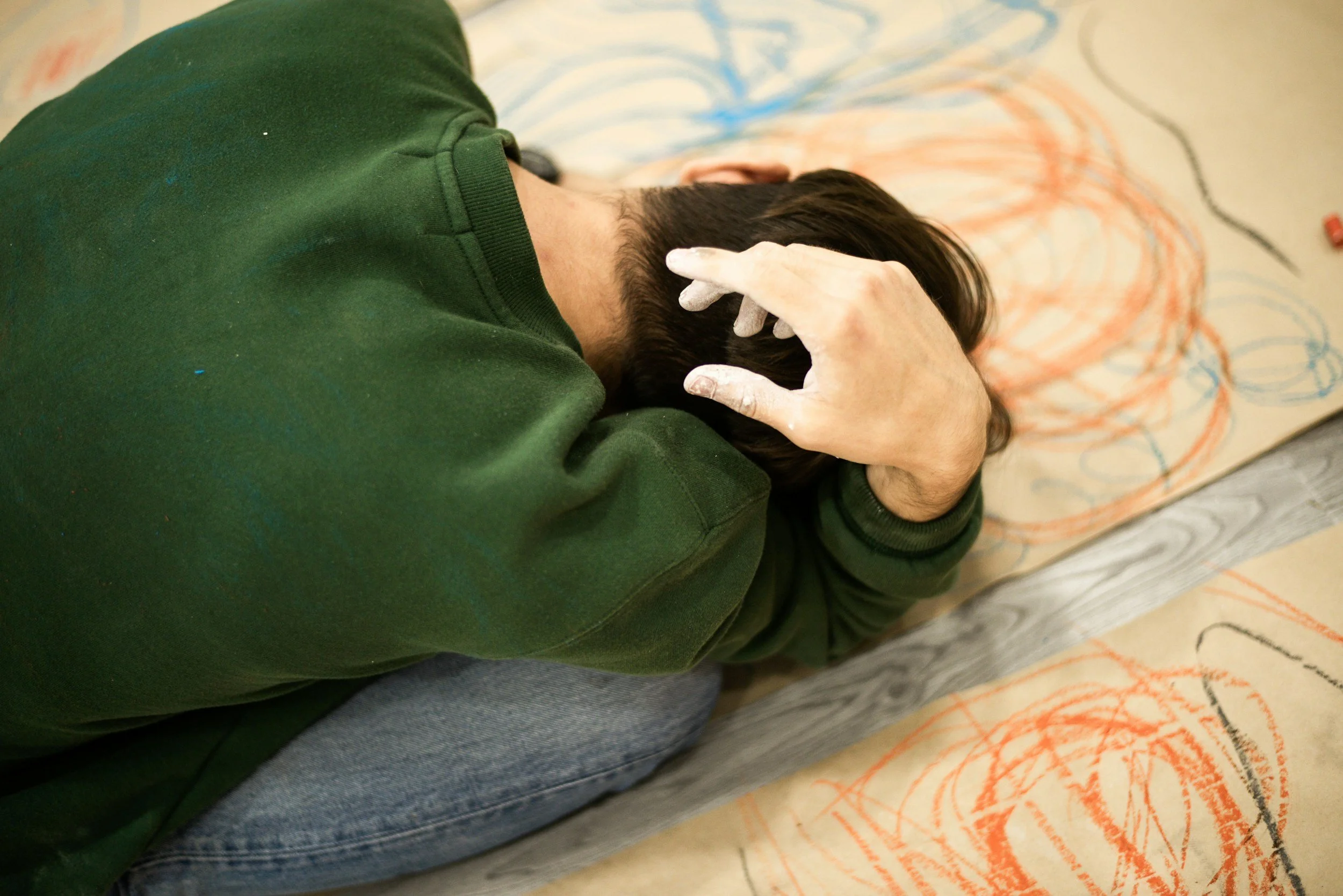
Walter Reed National Military Medical Center:: Bringing Art to Heal
Some of the most powerful innovations emerge when we discover that two seemingly incompatible worlds have more in common than anyone realized.
That was the challenge facing an emerging art therapy program at Walter Reed National Military Medical Center.
Early results were promising. Clinicians and therapists were seeing meaningful outcomes among service members recovering from physical injuries, trauma and the invisible wounds of war. Patients were engaging with the program. The work was helping.
Yet a persistent question remained::
How do you sustain and scale arts-based healing within one of the most structured and mission-driven institutions in the world?
At first glance, the cultures of the military and the arts appear fundamentally different.
One is often associated with discipline, hierarchy, readiness and precision.
The other with expression, exploration, creativity and emotion.
Because of these perceptions, arts programs within military settings are frequently viewed as complementary rather than essential—valuable perhaps, but difficult to justify when resources, priorities and outcomes are constantly scrutinized.
Working with medical staff, military leaders, arts professionals and partners at the National Endowment for the Arts, GREEN::HOUSE was asked to explore how these seemingly different value systems might be reconciled.
What we discovered was unexpected.
They did not need to be reconciled.
They were already aligned.
A closer examination of military culture revealed that the arts have long played a significant role in military life. From ceremonial traditions and military bands to storytelling, performance and shared cultural experiences, artistic expression has always been part of how the armed forces build identity, cohesion, resilience and connection.
At the time, the Pentagon's investment in military bands alone exceeded the annual budget of the National Endowment for the Arts.
The issue was never whether the military valued the arts.
The issue was how the value of arts-based healing was being communicated.
The breakthrough came when we shifted the conversation away from art itself and toward outcomes.
Rather than asking military leaders to evaluate arts programs through artistic criteria, we proposed assessing them using the same measures the military already uses to evaluate successful reintegration, recovery and readiness.
As concluded in our deliverable::
"Walter Reed's leaders could evaluate all of their arts programs using the same metrics the Pentagon uses to assess its own efforts to reintegrate soldiers into civilian life. This data could not only bolster the role of art at Walter Reed, but serve as the basis for new military arts programs."
In other words, art did not need to speak the language of culture.
It needed to speak the language of mission.
By connecting creative expression to measurable outcomes related to recovery, wellbeing, resilience and successful reintegration, the program could be understood not as an extracurricular activity, but as an important component of healing.
The project anticipated many conversations that have since become central to healthcare and veteran services, including the growing recognition of whole-person care, mental health, trauma-informed practice and the role of creative therapies in recovery.
Today, healthcare leaders increasingly understand that healing is not solely a clinical process. Recovery also involves identity, purpose, connection and the ability to make meaning from difficult experiences.
Art can play a powerful role in all of these.
The engagement was initiated by Mike Orlove of the National Endowment for the Arts, whose leadership helped bring together perspectives from healthcare, government and the arts to explore new possibilities for supporting service members and veterans.
For GREEN::HOUSE, the project reinforced a lesson that continues to shape our work:
Innovation often occurs not when we persuade people to adopt new values, but when we reveal the values they already share.
Because lasting change becomes possible when different communities discover they have been speaking about the same goals all along—simply in different languages.
As Mike Orlove later reflected::
"Working with GREEN::HOUSE is an exhilarating, 360-degree whirlwind experience. Their work in educational, business, not-for-profit and corporate communities around the world is driven by an utterly original approach to problem solving, requiring highly accomplished and creative people to leave their egos at the door and dive in." ::
"Walter Reed's leaders could evaluate all of their arts programs using the same metrics the Pentagon uses to assess its own efforts to reintegrate soldiers into civilian life.
This data could not only bolster the role of art at Walter Reed, but serve as the basis for new military arts programs."
For further reading, see our work with The West Collection, The GRAMMYs, Clinton Global Initiative, The Museum of Contemporary Photography, and Walter Reed Military Medical Hospital.