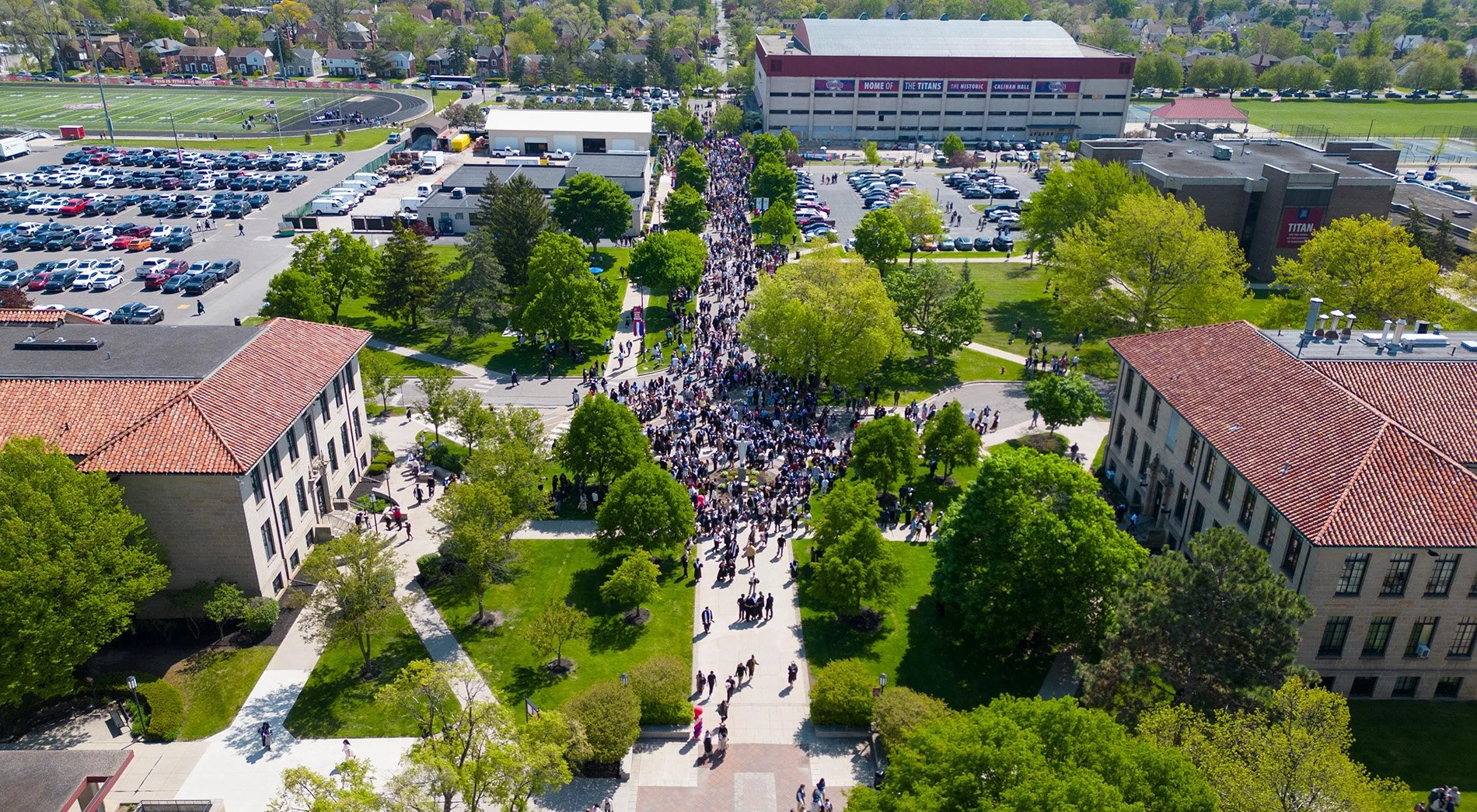
UDM:: Community, Culture, and The Future of Higher Education
Going deep into the hidden, living essence of a 150-year-old institution.
A HIDDEN ESSENCE
GREEN::HOUSE was invited to help University of Detroit Mercy explore a rather ambitious question::
How might The University become a national, living brand for the next 150 years?
Not a brand defined primarily by communications or marketing, but one expressed through the daily actions, relationships, and experiences of every person connected to the institution.
If a university’s brand is ultimately the sum of what people experience—not simply what an institution says about itself—then what should people experience at Detroit Mercy? More importantly, what should they become —and how might they be transformed—because of it?
The answers led us to much more than an end line—it took us deeper into the hidden, living essence of a 150-year-old institution.

The Challenge
As Detroit Mercy approached its sesquicentennial, the institution, like much of higher education, found itself confronting profound changes. Artificial intelligence, shifting demographics, new expectations from students, and growing questions about the purpose of higher education were challenging long-held assumptions about what universities exist to do.
Before any meaningful work could begin, however, we needed to create the conditions for a different kind of conversation.
Rather than beginning with strategy, positioning, or messaging, GREEN::HOUSE began with strategic imagination.
Working alongside the University’s executive leadership and the MarCom team, we posed a series of questions that, by their own admission, had never been asked before::
If we were building University of Detroit Mercy today—in 2026 instead of 1877—what would it look like?
For whom would we build it?
And how would we build it differently, knowing what the world now demands of higher education?
The questions mattered because they suspended assumptions long enough for a different truth to emerge.
They fundamentally changed the conversation.
Instead of asking how to preserve an institution inherited from the nineteenth century, leadership began imagining one intentionally designed for the twenty-first.
The discussion shifted from protecting legacy…
…to discovering possibility.
The question was no longer simply, How do we tell our story?
It became::
What story are we actually living?
The Journey
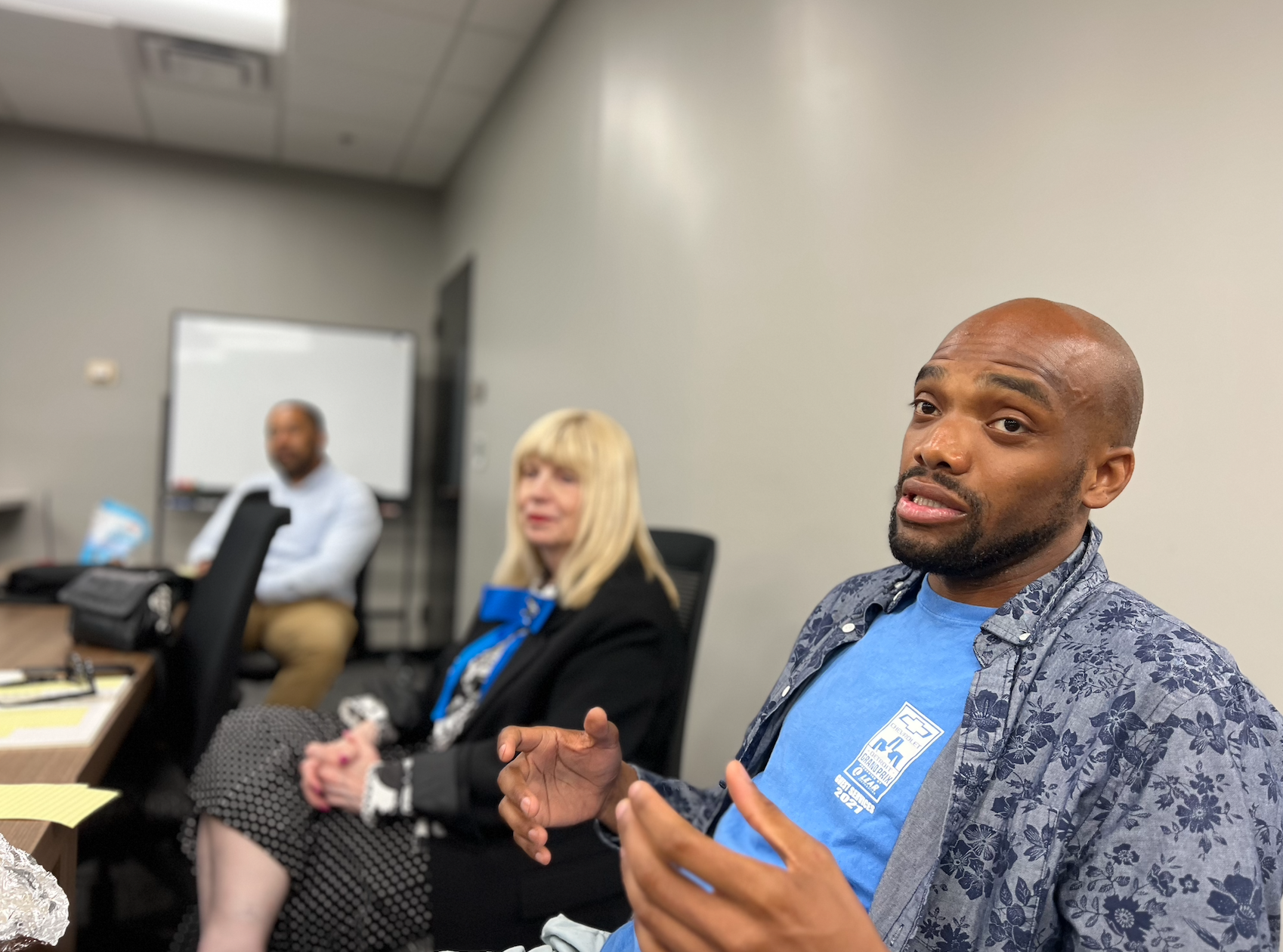
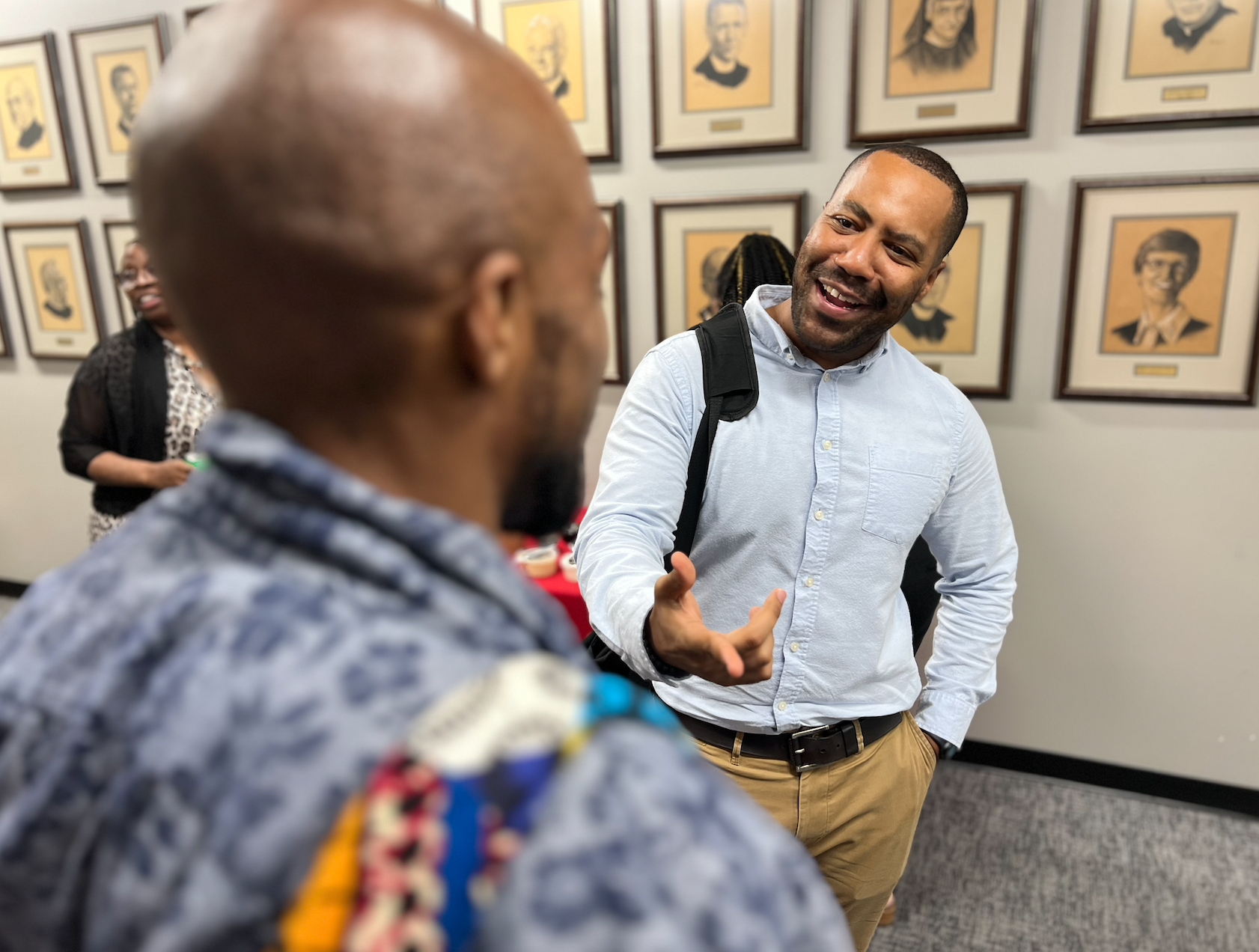
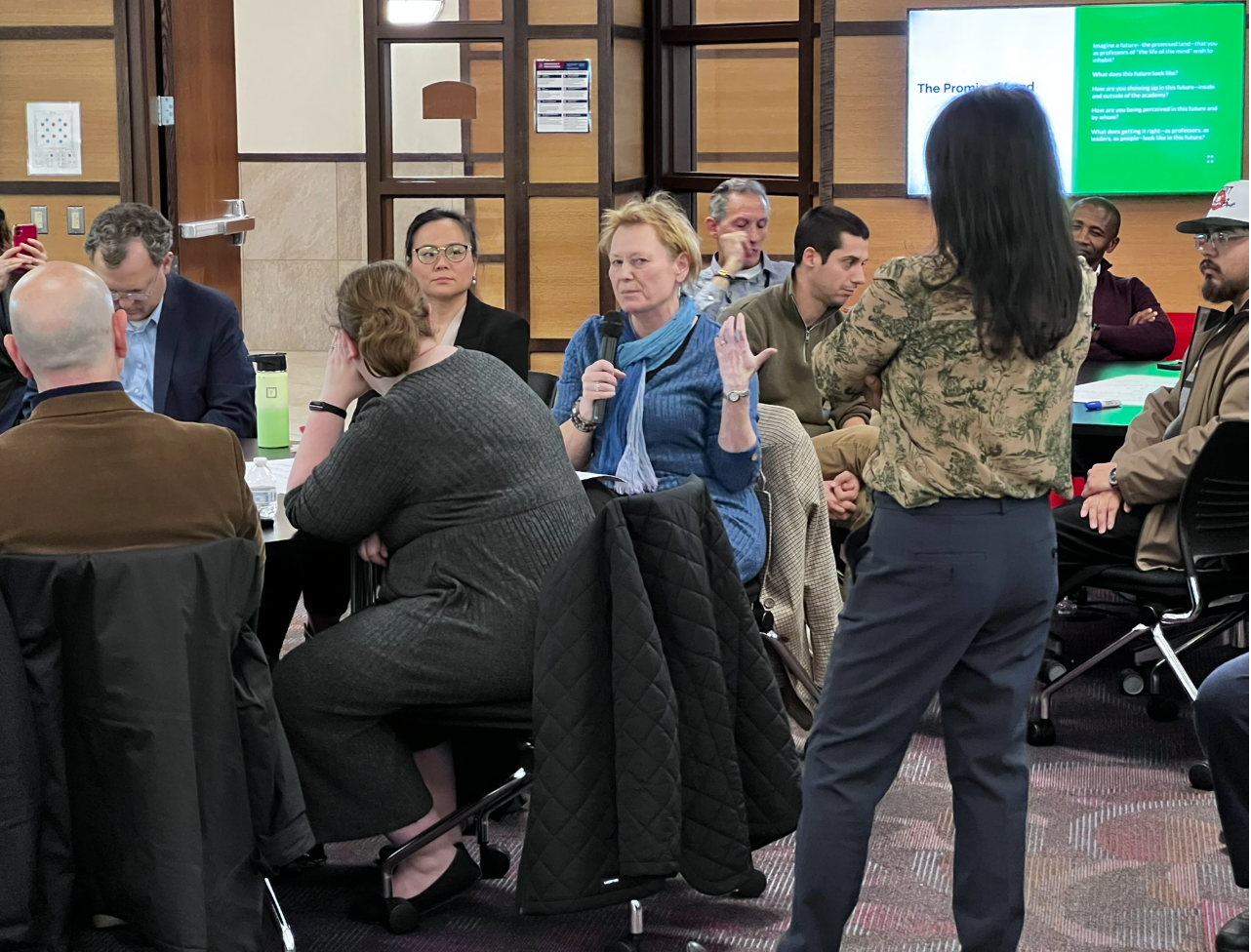
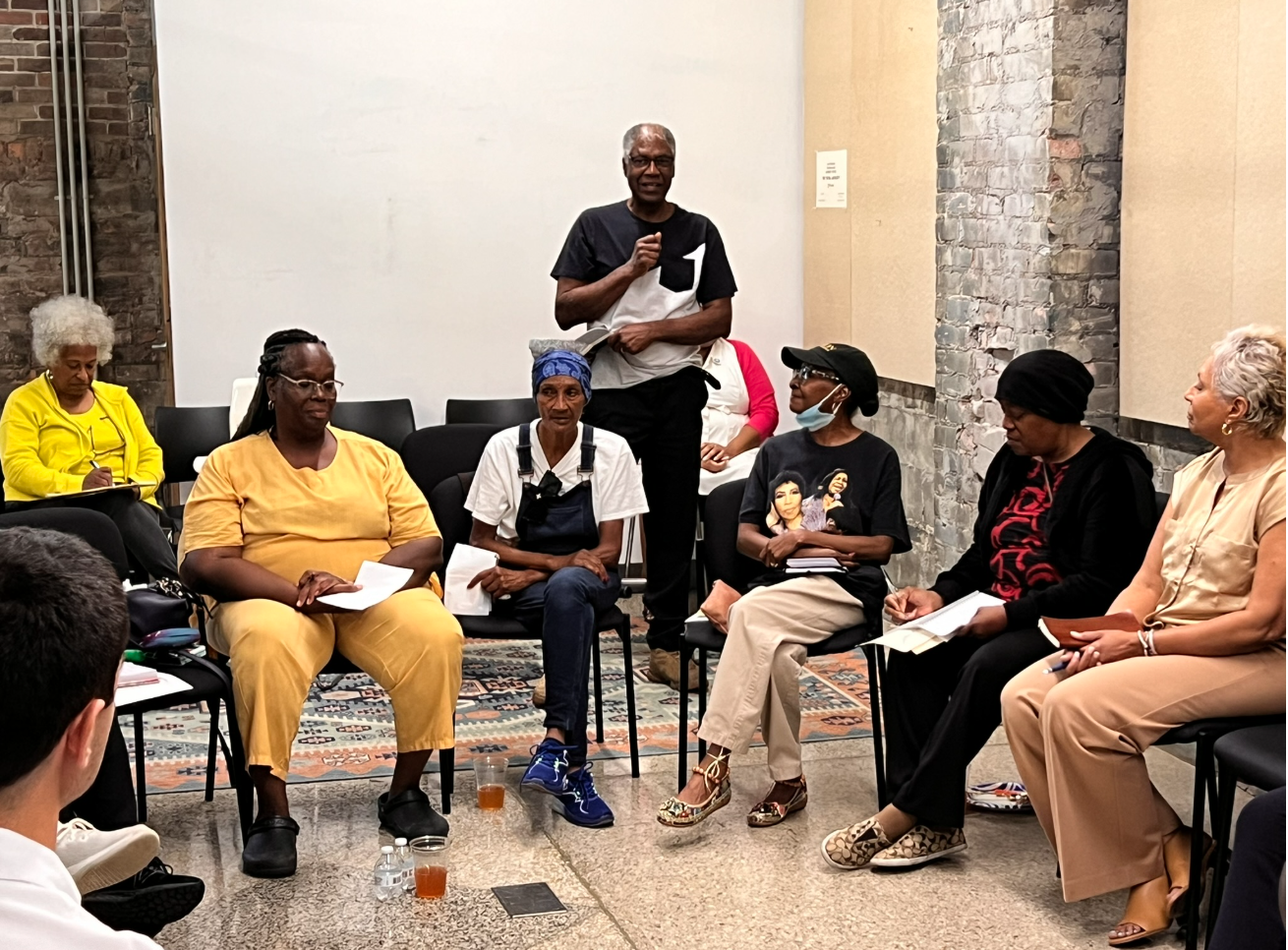
To answer that question, GREEN::HOUSE facilitated a series of Strategic Imagination Roundtables and community conversations involving students, faculty, staff, administrators, trustees, alumni, and community partners.
The objective was not to validate existing perceptions.
It was to discover what was already true—but largely unseen.
As conversations unfolded, participants consistently described transformative experiences that extended well beyond classrooms, majors, or degree programs.
Students spoke about relationships with faculty.
Faculty spoke about mentorship.
Community members described reciprocal partnerships with the University—existing partnerships and potential ones.
Alumni reflected on lives shaped by service, collaboration, and human connection.
At first glance, these appeared to be independent stories.
They weren’t.
Together they revealed something much larger.
Community engagement wasn’t simply one of Detroit Mercy’s strengths. It was the connective tissue running throughout the institution.
Not community engagement as volunteerism.
Not community engagement as an extracurricular activity.
But community engagement as the primary mechanism through which transformation occurs.
Students were not simply learning subject matter.
They were learning to work across differences.
To build trust.
To collaborate.
To lead with compassion.
To navigate complexity.
To become the kind of people capable of strengthening communities wherever life takes them, in whatever world comes their way.
The insight fundamentally changed the assignment.
Rather than asking how the University could communicate its values more effectively, we began exploring how every interaction could become an expression of those values.
How relationships between students and faculty reinforce the brand.
How executive leadership models it.
How staff embody it.
How alumni perpetuate it.
How community partners expand it.
How the city itself participates in it.
The brand was no longer something The University would promote. It would become something the University continuously performs—lives, in other words.
Said another way, what would the University look like if it were being built today, not in 1877? For whom would we build it and why?
The Progress
This work remains very much in progress.
What began as a branding engagement has evolved into an ongoing effort to design the conditions under which thousands of people can collectively live the Detroit Mercy brand every day.
Together, GREEN::HOUSE, University leadership and the MarCom team continue to explore new ways for every group of actors—from students, faculty, staff and to trustees, alumni, employers, neighborhood organizations and partners across Detroit—to find their place within this shared idea of community.
The result is not merely a finished branding system. It is the emergence of a new operating philosophy; one in which community engagement is no longer viewed as a program, an initiative, a department, or a box to check.
It becomes the organizing idea of the institution itself.
Because in an age increasingly defined by artificial intelligence, automation, and rapid change, perhaps the most valuable education a university can offer is not simply preparing students for the jobs of tomorrow—which might not be there.
It is preparing them to build stronger communities, stronger relationships, and a more human future—wherever that future leads.
The brand, in other words, is still being written.
Not just marketing materials.
But in the lives of the people who choose to live it everyday. ::
For related reading, please see the reports on USC, Health + Social, COBI Fellows, University of Illinois, and Exelon.
UDM graduation (home page) and aerial image (top) provided by University of Detroit Mercy.