Starbucks, Herman Miller, Johnson & Johnson + BBC:: How the Creative Center Holds
Every successful organization eventually encounters the same dilemma.
The very systems that create success can become barriers to future innovation.
As organizations grow, they naturally develop processes, metrics, reporting structures and operational disciplines designed to maximize performance. These systems create efficiency, predictability and scale. They also create pressure to protect existing products, existing markets and existing ways of working.
At the same time, long-term success depends on something very different: experimentation, imagination, risk-taking and the willingness to challenge assumptions.
The tension is unavoidable.
One side of the organization is focused on maximizing what exists.
The other is focused on reinventing what comes next.
Most organizations struggle because they view these forces as competitors.
The most innovative organizations learn how to make them collaborators.
Working with design and innovation leaders from Starbucks, Herman Miller, Johnson & Johnson and the BBC, GREEN::HOUSE set out to understand how large organizations sustain creativity over time—not as a one-time initiative, but as a durable organizational capability.
The challenge was especially relevant for companies whose success depends on continuous reinvention. While innovation is often celebrated in corporate culture, the social norms necessary to sustain it are frequently misunderstood or overlooked. Organizations invest heavily in creative talent but fail to create environments where that talent can consistently thrive.
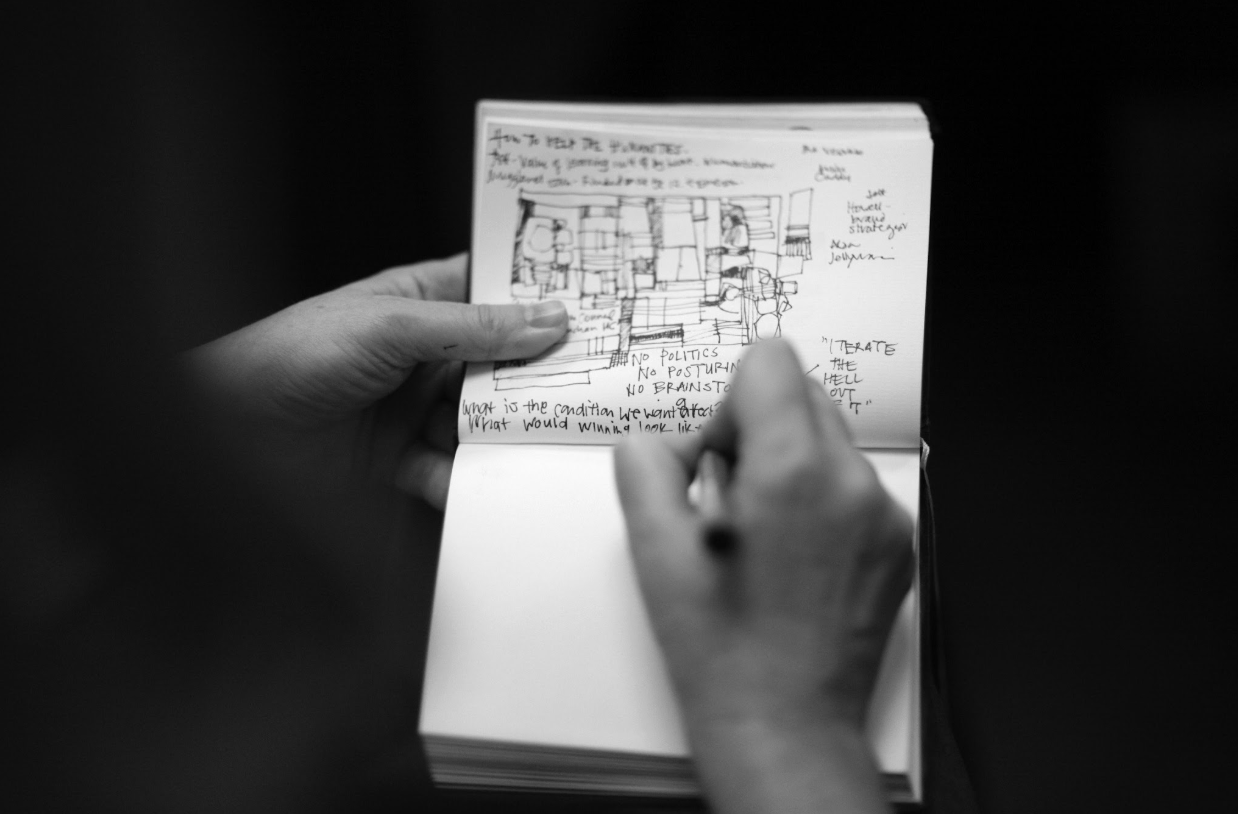
Through a series of workshops, interviews and collaborative investigations, participants explored the hidden dynamics that either support or suppress creativity inside complex institutions.
What emerged was a powerful insight::
Creativity survives not because organizations protect innovators from the system, but because they intentionally design systems that create productive tension between innovation and execution.
Together, we identified four distinct models through which organizations successfully nurture and sustain creativity.
Among the most important was the recognition that organizations operate within a natural cycle of reinvention and maximization.
At certain moments, innovation must take center stage. Teams are encouraged to imagine new possibilities, challenge assumptions and pursue opportunities beyond current business models.
At other moments, organizations must focus on maximizing the value of what has already been built. Resources shift toward refinement, scale, operational excellence and return on investment.
Neither phase is superior.
Both are essential.
The danger emerges when one side loses respect for the other.
As we noted in our deliverable::
"There are times when the people who are itching to develop a new product or plan must sit back and come up with tactics to harvest the benefits of what has already been built. Similarly, the folks responsible for the next earnings statement or report to the board need to remember that creative types always need some level of stimulus if they are to exercise their brilliance and bring about the next spring."
The strongest organizations create a shared understanding of where they are within this cycle, allowing maximizers and reinventors to engage in productive dialogue rather than perpetual conflict.
In many ways, the project anticipated challenges that have only intensified in recent years.
Today, organizations are simultaneously navigating artificial intelligence, rapid technological disruption, shifting workforce expectations and increasing pressure to innovate faster than ever before. The question is no longer whether companies need creativity.
The question is whether they can build cultures capable of sustaining it.
For GREEN::HOUSE, the work reinforced a core belief:
Innovation is not the result of creative individuals alone.
It is the product of social norms, structures and relationships that allow creativity and execution to coexist.
Because the organizations most likely to shape the future are not those that choose between imagination and discipline.
They are the ones that learn how to hold both at the same time. ::
"There are times when the people who are itching to develop a new product or plan must sit back and come up with tactics to harvest the benefits of what has already been built. Similarly, the folks responsible for the next earnings statement or report to the board need to remember that creative types always need some level of stimulus if they are to exercise their brilliance and bring about the next spring."